

How to Earn More Money As a Car Photographer with AVT
Traditional vehicle photography is mostly a price and speed game. It’s easy to replace and hard to stand out. 360° car photography, or digital car replicas, sits in a different category. It supports real business needs such as remote inspections, condition checks, and transparent inventory presentation.
As a result, demand for 360° vehicle imaging is driven less by aesthetics and more by its practical usefulness. Dealerships care about consistency, completeness, and accuracy. For photographers, this creates an opportunity to move away from commodity pricing and offer a service that retains its value as businesses scale.
In this article, we’ll look at how 360° car photography can help you grow your photography business, and how the same approach applies to other vehicle categories, including boats, trucks, vans, RVs, motorcycles, and even aircraft.
What Is 360° Vehicle Photography Technology?
Static images often leave unanswered questions. A 360 presentation reduces that gap by showing the vehicle as a whole, which helps buyers make decisions faster and with more confidence. While most commonly associated with cars, the same approach applies to other vehicle categories, including boats, trucks, vans, motorcycles, and aircraft. For photographers, this opens opportunities well beyond traditional automotive shoots.
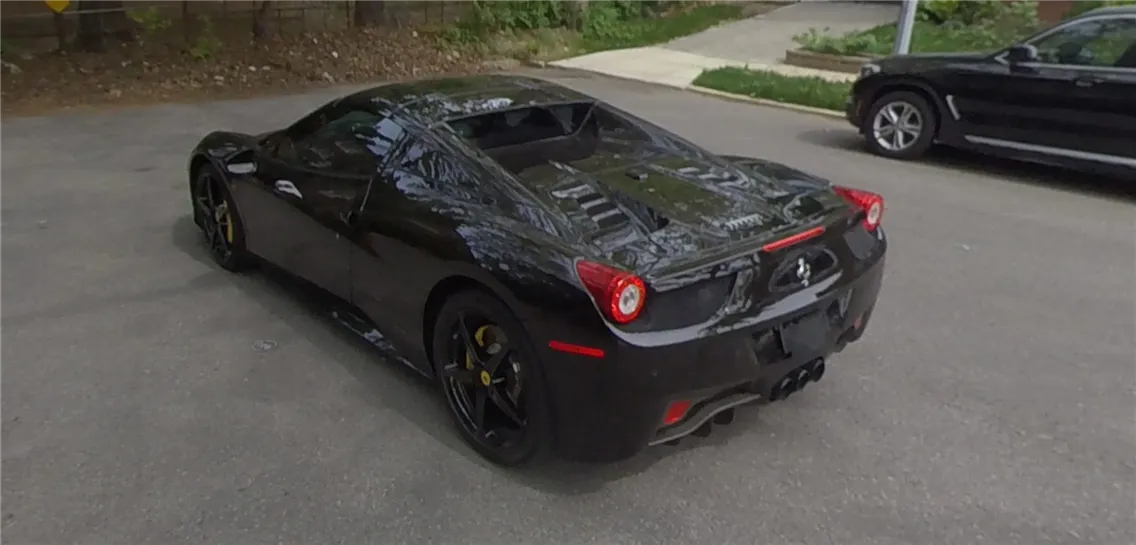
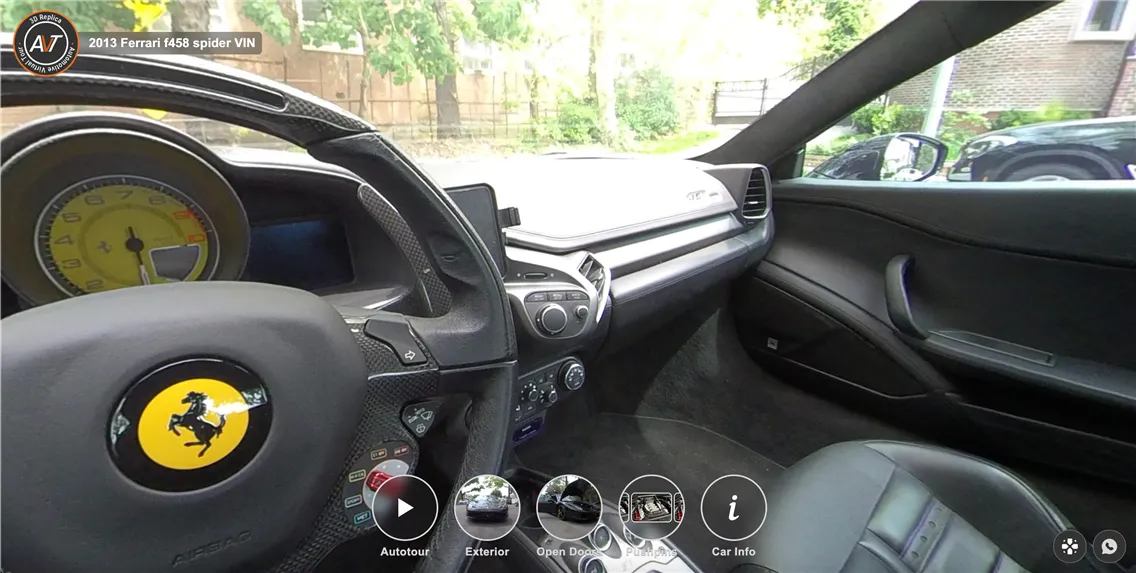
Technically, the process involves capturing panoramic images around and inside the vehicle and stitching them into a continuous, interactive view. The result is a virtual tour that allows buyers, dealers, or partners to inspect the condition and layout without relying on vague descriptions or follow-up photos. With tools such as AVT’s 360 virtual tours, photographers can capture both exterior and interior views in a standardized way, so viewers can rotate them, zoom in, and examine details much as they would during an in-person walkaround.
Digital Twins and Their Role
A key application of 360° panoramas is the creation of digital twins: virtual replicas of real-world vehicles. AVT digital car replicas document a vehicle’s actual condition, including visible wear, damage, or imperfections. When paired with timestamps and VIN linkage, AVT digital twins provide a clear reference point that can be shared across listings, inspections, and internal workflows. For photographers, 360° vehicle digital replica creation is a way to differentiate yourself in a competitive market.
The Advantages of Using AVT 360 Car Photography for Photographers
AVT’s platform is built to make digital replicas accessible to photographers at every skill level. The intuitive interface guides you through the capturing process with minimal technical barriers. Using a compatible 360° camera paired with AVT’s app on your mobile device, you enjoy a seamless workflow. The app provides you with step-by-step instructions for shooting, ensuring consistent, professional results every time. By simplifying the technical side of 360° photography, AVT allows you to focus on your business.
Time-Saving Features and Simplified Workflow
Time is one of the most valuable resources for photographers, and AVT is designed to save as much of it as possible. Key features include:
- Automated stitching. No more manually combining individual images into a panorama. AVT’s software does the heavy lifting, delivering smooth, seamless 360° images with minimal effort.
- Fast turnaround. With AVT, you can capture and process a full 360 virtual tour in record time, enabling faster delivery to clients.
- Integrated tools like push-pins. The platform eliminates the need for additional software, reducing the complexity of your workflow.
Competitive Edge for Photographers Offering Car Digital Replicas
Offering 360° car virtual tours with AVT’s technology sets you apart from traditional photographers by providing a service that’s both innovative and highly in demand. With AVT digital replicas, you position yourself as a specialist capable of delivering interactive, immersive experiences that clients can’t get elsewhere. This makes you an invaluable partner for car dealerships, rental agencies, and online marketplaces looking to elevate their visual content and attract more customers.
Long-Term Income Potential
AVT helps you build a more profitable business model. Here’s how:
- Upselling Opportunities: Add 360° photography as a premium service to your existing packages. Clients are willing to pay more for the enhanced value it provides, whether it’s a dealership looking to showcase inventory or an auction platform wanting to stand out.
- New Client Attraction: Tap into a growing market of businesses that need cutting-edge visuals to remain competitive, including manufacturers, rental services, and e-commerce platforms.
- Recurring Revenue: Build long-term relationships with clients who rely on your expertise for regular updates to their digital catalogs and presentations. In addition to digital replica build-up services, AVT also offers a partner program that allows photographers to earn by onboarding clients to the platform. From saving time to opening new revenue streams, 360 digital replicas give you the tools to succeed in a market.
How to Introduce 360° Car Photography Benefits to Your Clients
When you talk to clients: dealerships, rental companies, private sellers, or manufacturers, the conversation should not be about technology. It should be about solving practical problems: trust, transparency, clear processes, and faster sales.
Enhancing Buyer Experience and Building Trust Through Interactive Features with 360° Car Photography
Interactive 360° vehicle views allow buyers to examine a car in their own time and from their own perspective. Instead of scrolling through selected images, they can rotate the vehicle, zoom in on details such as paint, wheels, and trim, and explore the interior layout from multiple angles. This level of access reduces uncertainty. Buyers feel they understand what they are looking at, which makes them more comfortable moving forward. AVT’s platform adds several elements that strengthen this trust:
- Push pins for context
Clients can highlight specific features or visible imperfections using interactive markers supported by photos or videos. This allows important details to be explained without breaking the viewing experience. - VIN integration
Each digital replica is linked to the vehicle’s VIN, tying the visuals to a specific, identifiable car rather than a generic example. - Timestamped capture
Tours document the vehicle’s condition at the moment of capture, creating a fixed visual reference that supports transparency. - Consistent, reliable imagery
Automated processing ensures that tours follow the same quality and presentation standards, reducing the risk of misrepresentation.
Providing Detailed Views of Car Exteriors and Interiors
Digital replica captures both the big picture and the finer details. Whether it’s the sleek exterior design or the intricate stitching on the seats, this technology ensures no aspect of the car is overlooked. Your clients can show off the vehicle’s styling, condition, and features such as alloy wheels, sunroofs, or headlight designs, and allow buyers to "step inside" the car and explore the dashboard layout, seat materials, and storage options in a realistic, interactive way. For buyers unable to visit in person, this level of detail replicates the showroom experience online, making it easier to visualize and connect with the vehicle.
Boosting Conversions for Online Dealerships with Professional 360 Car Photos
As more vehicle purchases start online, buyer hesitation becomes one of the main barriers to conversion. Customers worry about hidden issues, outdated photos, or unclear conditions. 360° car photography helps address these concerns by showing the vehicle completely and transparently. Timestamped tours and VIN-linked visuals reassure buyers that what they see reflects the actual vehicle. When buyers can inspect a car thoroughly up front, decisions tend to happen faster. Fewer doubts lead to fewer delays, fewer back-and-forth questions, and a smoother path to purchase.
Helping Your Clients Stand out in a Market with Informative Car Photos
The automotive industry is fiercely competitive, and standing out is challenging. With 360° photography, your clients can differentiate themselves by:
- Offering a more modern and engaging presentation style than their competitors.
- Building a reputation for innovation and transparency, which resonates with today’s buyers.
- Providing a premium experience that leaves a lasting impression on potential customers.
How to Get and Manage 360° Vehicle Photography Clients
Clients don’t need another photographer. They need a partner who helps them present, document, and sell vehicles more effectively online. That mindset should guide how you choose clients, approach them, and structure your services.
Choose the Right Vehicle Categories First
Focus on segments with regular inventory turnover and decision-making at scale, such as:
- Cars: dealerships, manufacturers, rentals, auction platforms
- Vans: fleet operators, logistics companies, rental agencies
- Trucks: commercial dealers, leasing companies, fleet owners
- RVs and campers: dealerships, rental services, marketplaces
- Boats: brokers, marinas, charter companies
- Aircraft: private aviation firms, brokers, charter services
- Motorcycles: dealerships, auctions, specialist marketplaces
You don’t need to cover everything at once. Start where local demand and access are strongest, then expand.
Identify the Actual Decision-Maker
Selling 360° services means speaking to people responsible for outcomes, not aesthetics. Depending on the business, that may be:
- marketing managers focused on online performance
- sales directors concerned with conversion and deal speed
- fleet managers responsible for documentation and condition tracking
- business owners in smaller operations
- e-commerce managers overseeing listings and buyer experience
Your pitch should match their priorities. Avoid generic explanations and focus on what changes in their workflow when vehicle presentation improves.
Approach Clients With Context, Not a Generic Pitch
Effective outreach starts with understanding how a client currently presents and manages vehicles. Before contacting them, look at how complete their listings are, whether visuals answer buyer questions, and how inventory is documented across channels. Then position 360° photography as a practical upgrade for dealerships with clearer listings, fewer pre-sale questions, faster deals, and for rental and fleet businesses with accurate condition documentation and consistency. A short, relevant demo works better than long explanations.
Position 360° Services Correctly
360° vehicle photography can be introduced in two ways, depending on the client. As a value-add bundle, digital replicas with existing photo or video services for clients who already trust you and want a more complete solution. As a stand-alone service as inspection-ready documentation rather than “better photos”. This works best for fleets, rentals, auctions, and marketplaces.
If you use tiered packages or subscriptions, make sure your value comes from service, consistency, and execution. Clients can access AVT technology directly, so your differentiation should be in delivery, reliability, and integration into their workflow, not resale.
Educate Clients on Outcomes, Not Features
Many clients don’t need to understand how 360° photography works. They need to understand what it changes.
Focus on:
- clearer vehicle presentation
- fewer buyer doubts and follow-up questions
- higher engagement on listings
- more confident decision-making
Real examples and short explanations work better than technical details.
Manage Clients Like Long-Term Accounts
Repeat business comes from consistency and clear communication.
- define scope, timelines, and pricing upfront
- Use a standard workflow for capture and delivery
- keep clients informed without over-communicating
- be reliable rather than reactive
Tools like AVT’s platform help standardize delivery, but client trust is built through predictability and professionalism. When you position yourself around those outcomes, client acquisition becomes easier, pricing becomes more stable, and relationships last longer.
Your Path to Growth With AVT
As 360° vehicle photography becomes more widely adopted, growth is no longer limited to how many vehicles you can personally shoot. AVT is built to support different paths, starting with partnerships. The AVT partner program allows photographers and other professionals to earn by referring clients to the platform. If you work with dealerships, auctions, fleets, or rentals, you can introduce AVT as a solution for standardized vehicle capture and digital replicas. AVT handles the technology, processing, and support. Your role is the connection. This creates an income stream that is not tied to time on site or daily production capacity.
For those focused on production, AVT Driveway offers a scalable operating model. By setting up a fixed capture location in a strategic area, partners can service multiple dealerships and auctions from one place. Vehicles are brought to the driveway, captured using a standardized template, and processed into AVT digital replicas with consistent quality. The driveway setup removes guesswork from pano placement, shortens shoot times, and allows higher daily volume without increasing complexity. By promoting the driveway location on platforms like Google Maps, partners can attract nearby clients who need fast, reliable vehicle capture. Instead of traveling between sites, production becomes centralized and repeatable.
AVT gives you tools to choose how you want to grow as demand for standardized, inspection-ready vehicle visuals continues to expand.